ABOUT SHEN LIFE
MEET THE
FOUNDER...
Hello, my name is Stephen Rogers. My primary purpose in this life is to know myself in the deepest possible way, live from there fully, and teach the most effective tools for human transformation.
I’m not a theorist or a content repeater—I’m a Shen-led teacher–healer–scholar and outlier (or what systems of control would call an outlaw) with an ongoing, full-blown kundalini awakening that’s been unfolding since 1995.
My vision is a world where people embody spiritual enlightenment, live in optimal health, wellness, and longevity, and perform at superhuman levels. Everything I do—teaching, healing, writing, or speaking—is devoted to building that world. I welcome your participation and contribution.
Let’s reach for it!
-- Stephen D. Rogers
My vision is a world where people embody spiritual enlightenment, live in optimal health, wellness, and longevity, and perform at superhuman levels.
Let's Reach For It!
A MESSAGE FROM THE FOUNDER...
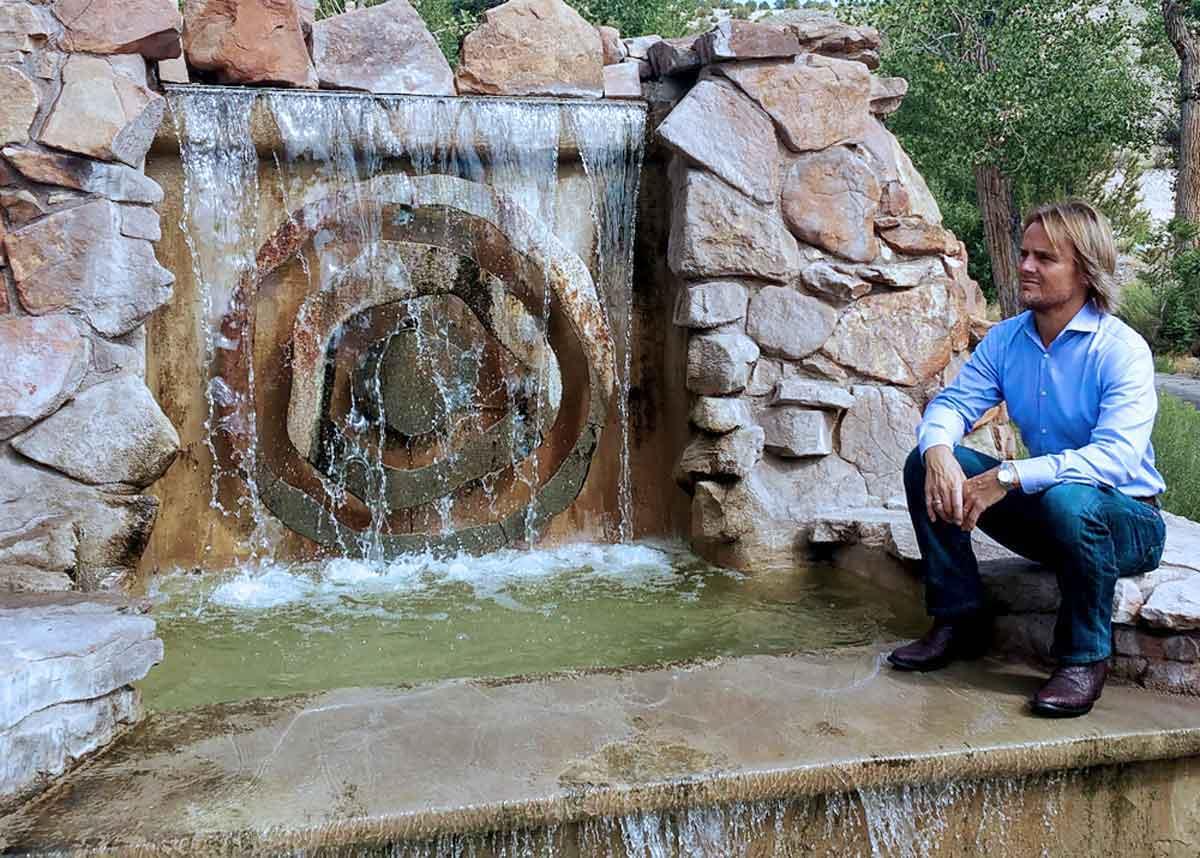
Hello. I'm Stephen Rogers. Since 1995, I've pursued one singular mission: to break through conventional human limitations and extract the frameworks that allow others to do the same. My path as teacher, healer, scholar, and outlier (or what systems of control would call an outlaw) has been driven by direct experimentation rather than learned information.
My vision for the world involves: humans embodying their full biological potential—accessing states of consciousness most consider mystical, achieving physical performance that defies medical boundaries, and experiencing health and longevity that rewrites aging protocols.
Everything I create—from teaching models to healing approaches—serves as grand strides for the systematic activation of dormant human capacity or Transformashen.
This journey calls to those ready to discard comfortable limitations and recover who and what they've always been. This is the revolution I propose.
Reach for it.
-- Stephen D. Rogers
"Stephen is at the top of my list of great people. He is the most profoundly awake person I know..."
~Raneil
more about StephEN HERE.
"She has knack for cutting through the BS and getting right to the core of what was jamming me up...."
~Zack
more about EriCA HERE.
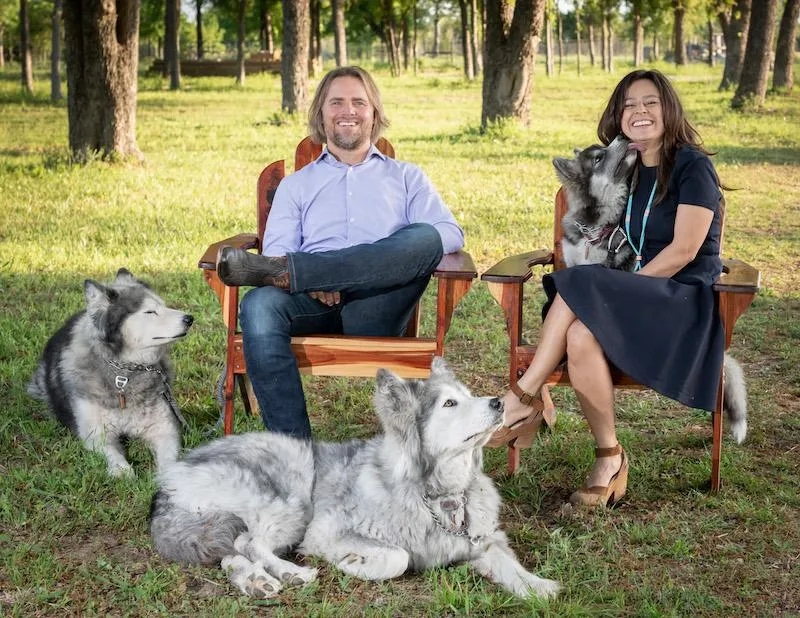
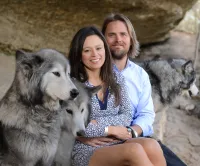
STEPHEN + ERICA
THE PACK LEADERS
Meet the visionaries behind Shen Life: Stephen and Erica—pioneers in the integration of spiritual awakening and practical transformation.
The trail so far
1995
A spontaneous activation that continues to this day initiated Stephen into his life's work.
1996
The earliest iterations of the Shen Life framework, with Stephen's private clients.
2001
Tested and refined with over 2,000 students at their Los Angeles center.
2008
Operations moved to a remote client model, with occasional in-person healing and live events.
2017
Taking to nomadic life, the work began to follow the demand of in-person project management.
THE PACK MEMBERS
The Shen Life community is lovingly referred to as a Pack after the Shen Life wolf dogs.

Over the years, ‘The Pack’ has included elite athletes, scholars, executives, physicians, therapists, award-winning creatives (Grammy, Emmy and Oscar winners), entrepreneurs, scientists, fitness gurus, and many others.
Are you ready to join the Shen Life Pack?
WOLFDOG Inspired
THE PACK
The Shen Life community is called The Pack, named for Bella, China, Atlas, Lupa, Vishen, Raven, and Sisu.
The Shen Life Pack honors the feral authenticity these animals embody. Like wolves, members maintain their sovereign nature while contributing to something larger than themselves.
The Pack represents a primal alternative to conventional community—one built on the recognition that true connection emerges only through radical individuation.
WRITINGS
THE SHEN LIFE PERSPECTIVE
To encourage you to continue along the Shen Life path, here are some writings to rattle your noggin and inspire you onward.
Systems Upgrade
They built systems to manage the human being. We built one to unleash it.
Medicine has failed us.
Not in the way conspiracy theorists mean — not some shadowy plot to keep you sick... although that component certainly exists. In a simpler, more damning way. Medicine looks at the human being through a mechanistic lens — parts and pieces, dissected, isolated, reduced to components. It treats the body the way a mechanic treats an engine: find the broken part, replace it or suppress it, send it back on the road. It got extraordinarily good at cutting, medicating, imaging, and managing symptoms — and it never once stepped back far enough to see the whole organism as one integrated living system. It never once asked the question that matters: Why does this person keep generating this condition?
It treats the expression. It never touches the author.
And the economics tell you everything about the intent. The system doesn't get paid to keep you well. It gets paid when you're sick. Every hospital, every pharmaceutical company, every insurance model is built on disease care, not health care — revenue generated by dysfunction, not by vitality. A system designed to keep human beings healthy would measure its success by how few people need it. This one measures success by how many people come back. The incentive isn't your wellness. The incentive is your next diagnosis.
Education has failed us. The word comes from the Latin educare — to draw out.[1] That was the original design: to draw out of the student what was already inside them. Capacity. Curiosity. The ability to think for themselves. The institution inverted its own name. Instead of drawing out, it stuffs in. It took the mind and trained it to memorize, regurgitate, and comply. It produced workers, not thinkers. Test-takers, not investigators. It taught you what to think and never once taught you how to examine the machinery doing the thinking. Twelve to twenty years of formal education and most people leave without the faintest idea how their own system works — how their thoughts form, why their emotions hijack them, what their body is actually telling them underneath the noise.
Psychology has failed us. The word comes from the Greek psyche — soul.[2] Psychology was supposed to be the study of the soul. It became the study of symptoms. It took the psyche — the inner world — and turned it into a diagnostic manual. It named the patterns, categorized the dysfunctions, and built an industry around managing symptoms at the level of the mind. Talk about your childhood. Identify your triggers. Develop coping strategies. And somehow, after decades of therapy culture, the species is more medicated, more anxious, more depressed, and more disconnected from itself than at any point in recorded history. The patterns running the show were never cognitive — they were somatic, installed before language, and no amount of talk will uninstall what the body is still running as survival kung fu.
Religion has failed us. The word comes from the Latin religare — to bind, to fasten.[3] And that was the original intent: to bind the human being to God. To fasten the creature to its source. But the institution hijacked the binding. It fastened the human being to itself — to the church, the doctrine, the hierarchy — and called that connection to God. The rope is still there. It's just tied to the wrong thing. Religion took the spirit — the most intimate, unmediated dimension of human experience — and institutionalized it. It put God behind a pulpit, behind a doctrine, behind a hierarchy of men who claimed exclusive access to the divine and then told you what God wanted. It replaced direct experience with belief. It replaced the fire with a description of the fire. And then it asked you to worship the description — with the audacity of certainty.
The legal system has failed us. It was built on punishment, not transformation. It manages behavior through threat — comply or be caged. It locks human beings inside concrete walls and calls it correction, calls it justice, calls it rehabilitation — while the recidivism rates prove, year after year, that it corrects nothing, justifies nothing, and rehabilitates almost no one. The system never asks what pattern produced this behavior. It never asks what would it take to actually change the person. It processes human beings like defective products on a factory line — stamp them, sort them, warehouse them, and release them unchanged into the same conditions that broke them. And when they come back — and they come back — the system calls that a repeat offense rather than a system failure. Worse still — some of the laws themselves are unjust. Following them isn't civic duty. It's complicity. When obedience to the law requires you to act against conscience — when compliance itself becomes unethical and immoral — the system hasn't just failed to deliver justice. It has become the thing justice was supposed to protect you from.
Government has failed us. The word itself tells you everything — gubernare mentis — to control the mind.[4] And that's exactly what it does. The system designed to serve the people became the thing the people serve. It was built to organize collective life — to coordinate resources, protect rights, maintain order. Instead, it became its own organism, with its own survival instincts, its own appetite for power, and its own refusal to be questioned. Partisanship is tribalism with a voter registration card. Policy is ideology wearing a suit. And the human being at the center of it all — the one the whole thing was supposedly built for — is reduced to a vote, a tax ID, and a demographic category. Government doesn't develop people. It manages populations. It keeps The Herd in manageable boxes. And The Herd stays there — because playing small is the only game the system taught them.
The monetary system has failed us — and this one cuts deeper than the others, because it doesn't just fail to serve the human being. It harvests them. A debt-based system — built on the premise that money is borrowed into existence and must be repaid with interest — is a system designed to extract. It takes the most powerful thing a human being possesses — their creative force, their capacity to build, to produce, to bring something into the world that didn't exist before — and converts it into a repayment schedule. You don't work to create. You work to service debt. The mortgage — from the Old French mort gage, literally "death grip" [5] — the student loan, the credit line — each one is a lien on your future energy. They named it honestly. A grip that doesn't release until you've paid with your life's hours or you die. That's not a metaphor. That's the contract. The monetary system doesn't just fail to elevate the human being — it siphons the very force that could.
These are not just flawed systems. They are failed systems. Systems that were built to maintain the species at a low baseline — to keep The Herd dysfunctional, but productive and compliant — never designed to elevate it. Never designed to take a human being from surviving to sovereign. Never designed to answer the only question that actually matters: What am I, and what am I capable of becoming?
The System for the System
Shen Life is not another self-help program. It is not a coaching model. It is not a spiritual tradition and it is not a protest against spiritual tradition.
Shen Life is a life system.
Shen Life starts where the failed systems stop.
It starts with the premise that the human organism is not broken — it is running the wrong program. The survival persona — the conditioned identity installed by family, culture, and The Herd — is running the life. It built a box around you before you were old enough to see the walls. And as long as the persona is captain, the organism operates at a fraction of its capacity. It survives. It copes. It manages. It never transforms.
Shen is the captain. You are the decisive element — the weather in every room, the author of every response. When the pattern running through the system is the pattern of your actual nature — not the survival program, not the conditioned identity, not the personality you built to navigate The Herd — the whole organism reorganizes. Not overnight. Not through belief. Through the slow, honest, uncomfortable process of letting what is false burn away and letting what is real run the show.
That's the work. Not fixing the parts. Changing the captain. And building a system — a real, integrated, whole-organism system — that supports that change at every level.
At the heart of all of this is one thing every failed system has in common: they left the spirit out.
Without spirit brought into the body and into the life — Shen-ergy descending into the organism, animating it, running it — every system humanity builds will eventually corrupt. It has to. A system designed by the survival persona, managed by the survival persona, and serving the survival persona can only produce more survival. It cannot elevate. It cannot transform. It cannot even see what transformation looks like, because it is operating without the one ingredient that makes transformation possible.
Rebuilding the human starts here. Not with a better policy. Not with a better therapy model. Not with a better theology. With the spirit — Shen — brought back into the body, back into the life, back into the driver's seat of the whole organism. Everything else follows from that. And without it, nothing follows at all.
This is not an upgrade to the existing model. This is a different species of approach. One that takes the best of what every discipline has learned about the human body, mind, and spirit — strips away the institutional limitations, the fragmentation, and the ideological ceilings — and starts with the one thing they all left out:
The spirit in the body. The captain in the seat.
So what does that system produce?
The Outlaw
An outlaw is not a criminal. An outlaw is someone who operates outside systems that no longer serve.
Not against them. Not in opposition to them for the sake of rebellion. Outside them — because those systems cannot take you where you need to go. Because the map they're using doesn't include the territory you're standing in. Because the ceiling they've built is their ceiling, and you've hit your head on it long enough to know it isn't yours.
The outlaw doesn't reject knowledge. The outlaw rejects the container. The outlaw takes what works — from medicine, from psychology, from neuroscience, from every tradition and every discipline that has produced something real — and leaves behind the institutional scaffolding that limits it. The politics. The orthodoxy. The credentialing that protects the guild more than it protects the patient. The ideology that decides, before investigation begins, what is and isn't possible.
The outlaw operates from direct observation. From what works. From observing human beings in every state of crisis, breakdown, and breakthrough — and watching what actually moves the needle versus what just generates billable hours.
The Mystic
A mystic is not a monk. A mystic is not a guru. A mystic is not someone who reads about God, talks about God, or believes in God.
A mystic is someone who has direct experience of God.
Not a concept. Not a theology. Not the warm feeling you get during worship music. Direct, unmediated contact with the intelligence that runs everything — felt in the body, known in the gut, undeniable in the way that a burn is undeniable. You don't believe in fire after you've been in it. You know. And what you bring to that fire — the kindling — determines what burns away and what remains.
The mystic's authority doesn't come from a book, a lineage, or an institution. It comes from the encounter itself. From having been reorganized by something that cannot be named, cannot be contained by any single tradition, and cannot be reduced to a belief system — because it preceded every belief system and will outlast all of them.
Mystical experience is not rare. It is natural. It is built into the human organism the same way digestion is built in. The only reason it appears rare is that every system designed to manage the spiritual dimension of human life has done its job so thoroughly that most people don't even know the capacity exists. They were given a description of fire and told that the description was the experience.
It isn't.
The Outlaw Mystic
Put them together.
Someone who operates outside failed systems — not from ignorance, but from decades of working inside them and watching them fail. And someone who has direct, embodied experience of the intelligence that those systems either ignore, institutionalize, or deny.
That's not a title. It's a job description.
The Outlaw Mystic doesn't reject any system's knowledge — they reject every system's ceiling. They take what medicine knows about the body and refuse the idea that it's separate from the mind, the emotions, and the spirit. They take what psychology knows about the interior and refuse to call symptom management a cure. They take what every genuine tradition has pointed toward — the fire, the light, the reorganizing intelligence — and refuse the middleman who stands between a human being and their own direct experience of the divine.
They ask the questions the systems were never designed to ask: What is this organism actually for? What happens when you stop managing the persona and start dismantling it? What happens when you stop worshiping the description and walk into the fire yourself?
The spirit in the body. The captain in the seat. The outlaw who takes what works and leaves the container. The mystic who walks into the fire instead of worshiping the description.
That is what Shen Life builds.
That is what this work is for.
Reach for it.
References:
[1] Education — From Latin educare: "to draw out, to bring up, to rear." Related to educere ("to lead forth"). The original sense was of drawing out latent capacity from the student, not inserting information into them. Source: Oxford English Dictionary; Lewis & Short, A Latin Dictionary.
[2] Psychology — From Greek psyche ("soul, spirit, breath of life") + logos ("study, discourse"). Literally "the study of the soul." The word entered modern usage in the 16th century, initially retaining its soul-oriented meaning before shifting toward empirical and clinical usage in the 19th century. Source: Oxford English Dictionary; Liddell & Scott, A Greek-English Lexicon.
[3] Religion — From Latin religare: "to bind, to fasten." Cicero alternatively traced it to relegere ("to re-read, to go over again"), but the religare etymology — attributed to early Christian writer Lactantius (c. 250–325 AD) — became the dominant interpretation. Source: Oxford English Dictionary; Lactantius, Divinae Institutiones, Book IV.
[4] Government — From Latin gubernare ("to steer, to control, to govern"), itself borrowed from Greek kybernan ("to steer a ship"). The popular etymology pairing gubernare with mentis (Latin: "of the mind") — yielding "mind control" — is a folk derivation, not the formal linguistic origin. The suffix -ment in English typically derives from the Latin -mentum (denoting result or instrument), not from mens/mentis (mind). The resonance, however, is worth sitting with. Source: Oxford English Dictionary; Lewis & Short, A Latin Dictionary.
[5] Mortgage — From Old French mort gage: mort ("dead") + gage ("pledge") — literally a "death pledge." Named so because the deal "dies" either when the debt is paid or when the borrower defaults. The term entered English legal language in the late 14th century. Source: Oxford English Dictionary; Sir Edward Coke, Commentaries on Littleton (1628).
Want to discuss something?
CONTACT
Like your online security, your privacy is a priority to us. To initiate a conversation, please submit the below form. Then, look for our email in your inbox within 1-3 business days. This process helps us confirm you are an actual person interested in our services, while also representing your informed consent for us to engage with you about Shen Life. Your submission indicates you understand the nature of this work and willingly seek information or services from us.

CONTACT
12400 W. HWY 71,
STE 350-312
BEE CAVE, TX 78738
1-866-497-SHEN (7436)
Copyright 2026. Shenology, Inc. All rights reserved.
Disclaimer: Educational content only. Not medical, mental health, legal, tax, or financial advice. Not a substitute for licensed professional care. If you are in crisis, call or text local emergency services or a crisis line in your area.