
THE SHEN LIFE PACK
The Shen Life community is lovingly referred to as a Pack after the Rogers’ wolf dogs Bella*, China*, Atlas*, Lupa, Vishen, Raven and Sisu. Read more about each one here.
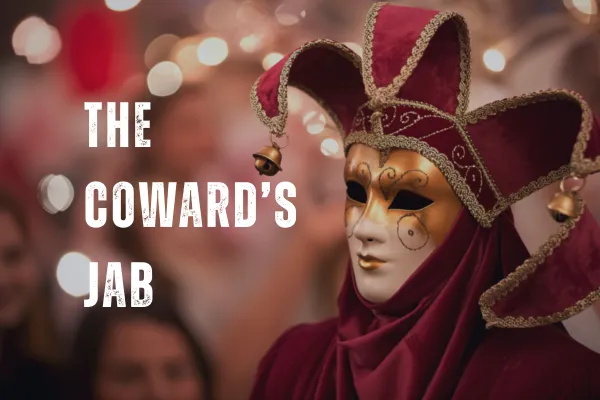
The Coward's Jab
Sarcasm is everywhere.
It's the default setting in most comedy. The go-to move in group chat. The tone of half the internet.
And almost no one calls it what it is: a veiled attack disguised as humor.
The dictionary is honest about it — sarcasm is "the use of irony to mock or convey contempt." That's not a joke. That's an insult wearing a mask.
The Court Jester's Game
This isn't new.
The royal court is likely where the veiled insult was perfected. Civilized society looked down on emotional outbursts, fits of passion, and direct conflict. Losing your composure meant losing power. So every scheme, every jab, every strategy of influence was designed to hide the author's true intent.
The court jester had the only license to criticize the king, his court, and his subjects — but only if the criticism could be denied as "merely in jest."
That's sarcasm's DNA.
Say the real thing. Wrap it in humor. And if confronted, retreat behind: "Oh, I was just joking."
It's sneaky. It's weak. And it's deceptive.
Best delivered in a snooty British accent, of course.
Why It's a Sovereignty Problem
Here's where it becomes a Shen Life issue.
Words carry energy. Every sentence you speak either deposits clarity into the room or leaks something murky into it. Sarcasm almost always leaks — because the speaker won't own what they're actually saying.
That's not humor. That's cowardice with a laugh track.
A sovereign communicator says what they mean. They don't need a back door. They don't need plausible deniability. They don't fire a round and then pretend the gun was a toy.
When you use sarcasm to deliver a message you're too afraid to say directly, you've just told the room two things: what you think, and that you don't have the spine to stand behind it.
That's not clever. That's a survival move — social kung fu from someone who learned early that direct truth gets punished, so they learned to smuggle it in sideways.
Satire Is a Different Animal
Now — I'm not anti-humor. Far from it.
I've dabbled in sarcasm myself. But what I prefer — and what I use intentionally — is satire.
The difference matters.
Sarcasm mocks a person to wound them. Satire mocks a pattern to expose it.
Satire "mocks human weakness or aspects of society." It doesn't hide. It aims. It names the thing everyone is pretending not to see — and makes it so vivid you can't unsee it.
When I use satire, my listeners know I mean what I say. I'm not masking an insult. I'm making fun of something in order to stigmatize it — to drag it out of the blind spot of avoidance so it can't be ignored any longer. And hopefully, the word picture sticks.
Good examples: lib-tard and conserva-turd.
Lib-tard conveys the childlike delusion of those on the left. Conserva-turd points out the stuck-ness — the psychological constipation — on the right.
Neither side gets a pass. Both get a mirror.
That's satire. It doesn't play favorites. It plays honest.
The Rule: Own It
If you use sarcasm to make a point — own it.
Don't fire the shot and then holster the weapon behind "I was just kidding." That kills the message and exposes you as someone who can't stand behind their own words.
Say it. Mean it. Let the room adjust.
When you own what you say, two things happen. First, the message loses the cowardly sting that makes sarcasm feel like a sucker punch. Second, people know where you stand. And in a world full of people hiding behind irony, that kind of directness is rare — and respected.
Clean Language, Clean Energy
In the end, the old saying still applies: if you can't say something nice, don't say anything at all.
But let's be adults about it.
There are times when humor — sharp, aimed, intentional humor — is the most effective tool of correction and criticism available. Satire can crack open a blind spot faster than a lecture. A well-placed joke can do what a thousand serious words can't.
The key is energy.
If there's anger underneath the delivery, the audience feels it — no matter how clever the packaging. That's not satire anymore. That's aggression in costume. And it will cost you energetically whether you realize it or not.
Keep the energy clean. Make your point. Be funny. And make sure the humor serves the truth — not your ego's need to wound.
T.H.I.N.K. First
When in doubt, run it through this filter before you speak:
T — Is it Thoughtful?
H — Is it Helpful?
I — Is it Inspiring?
N — Is it Necessary?
K — Is it Kind?
Can sarcasm and kindness coexist? I'm honestly not sure.
But satire and kindness can — when the aim is to wake someone up, not cut them down.
You be the judge.
Reach for it!

The Coward's Jab
Sarcasm is everywhere.
It's the default setting in most comedy. The go-to move in group chat. The tone of half the internet.
And almost no one calls it what it is: a veiled attack disguised as humor.
The dictionary is honest about it — sarcasm is "the use of irony to mock or convey contempt." That's not a joke. That's an insult wearing a mask.
The Court Jester's Game
This isn't new.
The royal court is likely where the veiled insult was perfected. Civilized society looked down on emotional outbursts, fits of passion, and direct conflict. Losing your composure meant losing power. So every scheme, every jab, every strategy of influence was designed to hide the author's true intent.
The court jester had the only license to criticize the king, his court, and his subjects — but only if the criticism could be denied as "merely in jest."
That's sarcasm's DNA.
Say the real thing. Wrap it in humor. And if confronted, retreat behind: "Oh, I was just joking."
It's sneaky. It's weak. And it's deceptive.
Best delivered in a snooty British accent, of course.
Why It's a Sovereignty Problem
Here's where it becomes a Shen Life issue.
Words carry energy. Every sentence you speak either deposits clarity into the room or leaks something murky into it. Sarcasm almost always leaks — because the speaker won't own what they're actually saying.
That's not humor. That's cowardice with a laugh track.
A sovereign communicator says what they mean. They don't need a back door. They don't need plausible deniability. They don't fire a round and then pretend the gun was a toy.
When you use sarcasm to deliver a message you're too afraid to say directly, you've just told the room two things: what you think, and that you don't have the spine to stand behind it.
That's not clever. That's a survival move — social kung fu from someone who learned early that direct truth gets punished, so they learned to smuggle it in sideways.
Satire Is a Different Animal
Now — I'm not anti-humor. Far from it.
I've dabbled in sarcasm myself. But what I prefer — and what I use intentionally — is satire.
The difference matters.
Sarcasm mocks a person to wound them. Satire mocks a pattern to expose it.
Satire "mocks human weakness or aspects of society." It doesn't hide. It aims. It names the thing everyone is pretending not to see — and makes it so vivid you can't unsee it.
When I use satire, my listeners know I mean what I say. I'm not masking an insult. I'm making fun of something in order to stigmatize it — to drag it out of the blind spot of avoidance so it can't be ignored any longer. And hopefully, the word picture sticks.
Good examples: lib-tard and conserva-turd.
Lib-tard conveys the childlike delusion of those on the left. Conserva-turd points out the stuck-ness — the psychological constipation — on the right.
Neither side gets a pass. Both get a mirror.
That's satire. It doesn't play favorites. It plays honest.
The Rule: Own It
If you use sarcasm to make a point — own it.
Don't fire the shot and then holster the weapon behind "I was just kidding." That kills the message and exposes you as someone who can't stand behind their own words.
Say it. Mean it. Let the room adjust.
When you own what you say, two things happen. First, the message loses the cowardly sting that makes sarcasm feel like a sucker punch. Second, people know where you stand. And in a world full of people hiding behind irony, that kind of directness is rare — and respected.
Clean Language, Clean Energy
In the end, the old saying still applies: if you can't say something nice, don't say anything at all.
But let's be adults about it.
There are times when humor — sharp, aimed, intentional humor — is the most effective tool of correction and criticism available. Satire can crack open a blind spot faster than a lecture. A well-placed joke can do what a thousand serious words can't.
The key is energy.
If there's anger underneath the delivery, the audience feels it — no matter how clever the packaging. That's not satire anymore. That's aggression in costume. And it will cost you energetically whether you realize it or not.
Keep the energy clean. Make your point. Be funny. And make sure the humor serves the truth — not your ego's need to wound.
T.H.I.N.K. First
When in doubt, run it through this filter before you speak:
T — Is it Thoughtful?
H — Is it Helpful?
I — Is it Inspiring?
N — Is it Necessary?
K — Is it Kind?
Can sarcasm and kindness coexist? I'm honestly not sure.
But satire and kindness can — when the aim is to wake someone up, not cut them down.
You be the judge.
Reach for it!
Walk The Shen Life Path
To build your Shen Life practice, there is an ideal path. Each step builds on the one prior. Keep it simple. Train it in order.
STEP 1.
Take The Transformashen Training.
The entry point. Simple, straightforward approach to begin the Transformashen and build your foundation. Designed for beginners and seasoned seekers alike. No fluff. No theatrics. Just practice.
STEP 3.
Join The Revolushen.
Ongoing transmissions: teachings and commentary that keep you oriented in a world that rewards fragmentation. This is where you refine discernment, deepen doctrine, and stay in the current—without spiritual bypassing and without reductionist “nothing is real” nonsense.
STEP 2.
Dive Into The Shen Life Immershen.
The full work. A guided + self-directed immersion through the complete Shen Life model. This is where The Core Work and The Life Work becomes fully integrated—because you’re orienting the whole system toward a higher stage of functioning.
STEP 4.
Join The Shen Life Pack.
The gathering hall. Community, continuity, and an organized teaching library so you’re not doing this alone, and you’re not wandering without structure. Profound change needs context. The Den provides it.
More From The Shen Life Perspective
The Coward's Jab
Sarcasm is everywhere.
It's the default setting in most comedy. The go-to move in group chat. The tone of half the internet.
And almost no one calls it what it is: a veiled attack disguised as humor.
The dictionary is honest about it — sarcasm is "the use of irony to mock or convey contempt." That's not a joke. That's an insult wearing a mask.
The Court Jester's Game
This isn't new.
The royal court is likely where the veiled insult was perfected. Civilized society looked down on emotional outbursts, fits of passion, and direct conflict. Losing your composure meant losing power. So every scheme, every jab, every strategy of influence was designed to hide the author's true intent.
The court jester had the only license to criticize the king, his court, and his subjects — but only if the criticism could be denied as "merely in jest."
That's sarcasm's DNA.
Say the real thing. Wrap it in humor. And if confronted, retreat behind: "Oh, I was just joking."
It's sneaky. It's weak. And it's deceptive.
Best delivered in a snooty British accent, of course.
Why It's a Sovereignty Problem
Here's where it becomes a Shen Life issue.
Words carry energy. Every sentence you speak either deposits clarity into the room or leaks something murky into it. Sarcasm almost always leaks — because the speaker won't own what they're actually saying.
That's not humor. That's cowardice with a laugh track.
A sovereign communicator says what they mean. They don't need a back door. They don't need plausible deniability. They don't fire a round and then pretend the gun was a toy.
When you use sarcasm to deliver a message you're too afraid to say directly, you've just told the room two things: what you think, and that you don't have the spine to stand behind it.
That's not clever. That's a survival move — social kung fu from someone who learned early that direct truth gets punished, so they learned to smuggle it in sideways.
Satire Is a Different Animal
Now — I'm not anti-humor. Far from it.
I've dabbled in sarcasm myself. But what I prefer — and what I use intentionally — is satire.
The difference matters.
Sarcasm mocks a person to wound them. Satire mocks a pattern to expose it.
Satire "mocks human weakness or aspects of society." It doesn't hide. It aims. It names the thing everyone is pretending not to see — and makes it so vivid you can't unsee it.
When I use satire, my listeners know I mean what I say. I'm not masking an insult. I'm making fun of something in order to stigmatize it — to drag it out of the blind spot of avoidance so it can't be ignored any longer. And hopefully, the word picture sticks.
Good examples: lib-tard and conserva-turd.
Lib-tard conveys the childlike delusion of those on the left. Conserva-turd points out the stuck-ness — the psychological constipation — on the right.
Neither side gets a pass. Both get a mirror.
That's satire. It doesn't play favorites. It plays honest.
The Rule: Own It
If you use sarcasm to make a point — own it.
Don't fire the shot and then holster the weapon behind "I was just kidding." That kills the message and exposes you as someone who can't stand behind their own words.
Say it. Mean it. Let the room adjust.
When you own what you say, two things happen. First, the message loses the cowardly sting that makes sarcasm feel like a sucker punch. Second, people know where you stand. And in a world full of people hiding behind irony, that kind of directness is rare — and respected.
Clean Language, Clean Energy
In the end, the old saying still applies: if you can't say something nice, don't say anything at all.
But let's be adults about it.
There are times when humor — sharp, aimed, intentional humor — is the most effective tool of correction and criticism available. Satire can crack open a blind spot faster than a lecture. A well-placed joke can do what a thousand serious words can't.
The key is energy.
If there's anger underneath the delivery, the audience feels it — no matter how clever the packaging. That's not satire anymore. That's aggression in costume. And it will cost you energetically whether you realize it or not.
Keep the energy clean. Make your point. Be funny. And make sure the humor serves the truth — not your ego's need to wound.
T.H.I.N.K. First
When in doubt, run it through this filter before you speak:
T — Is it Thoughtful?
H — Is it Helpful?
I — Is it Inspiring?
N — Is it Necessary?
K — Is it Kind?
Can sarcasm and kindness coexist? I'm honestly not sure.
But satire and kindness can — when the aim is to wake someone up, not cut them down.
You be the judge.
Reach for it!

Contact
12400 W. HWY 71,
STE 350-312
BEE CAVE, TX 78738
1-866-497-SHEN (7436)