THE SHEN LIFE PERSPECTIVE
To keep you moving on the Shen Life path, here are writings designed to rattle your noggin, restore your signal, and aim you back at what’s real.
Don’t binge them like content. Read one. Feel what it does to you. Then act.
Energy Economics
You are not just a body.
You are a dynamic bioenergetic system—spiritual, mental, emotional, and physical.
And underneath all of it is one resource that determines whether you win the day or collapse under it: vital energy.
In Shen Life we refer to this perspective as energy economics.
Not as a metaphor.
As a management problem.
Just like monetary economics tracks production, distribution, and consumption of money, energy economics tracks how you generate, spend, leak, and invest your life-force.
When your account runs low, you don’t just feel tired—you start seeing the early signs of system breakdown. [1]
Ultimately, your life is built upon what your system can afford.
Your Energy Account
Think of your vitality like a bank account.
Some choices deposit energy.
Some choices withdraw energy.
Some patterns quietly leak energy all day.
In energy economics, the only question is: what’s your balance?
When your account is high, you feel vital—charged, clear, capable of anything.
When your account is low, you feel drained and sluggish, and the system starts showing signs of breakdown—exhaustion, burnout, or getting sick more easily. [1]
Low energy pushes your life into debt.
High energy expands your life into leverage.
The goal is simple:
stay in positive balance.
The Three Tiers of Energy Exchange
Energy comes in and goes out through three main tiers.
Tier 1: Primary Sources
This is your base income:
food
air
water
Good, nutrient-rich food sustains life better than empty calories. Clean air and clean water raise your baseline more than polluted inputs. [2]
Granted, any food, air, and water are better than none at all.
But your quality of inputs sets the ceiling of your outputs.
Tier 2: People, Places, Things
This is your daily marketplace.
Every interaction yields a return.
Some contacts give you ROI.
Some contacts drain you.
Your job is not to become paranoid.
Your job is to become literate.
Tier 3: Inner Domain
This is the multiplier.
Your internal state can either compound your energy… or vaporize it.
An undisciplined mind, unrestrained desire, and imbalanced emotions are some of the quickest ways to lose energetic capital.
This is why Shen Life treats mindfulness and meditation as a form of investing.
Not as wellness branding.
As stewardship.
When you can regulate attention and emotion, you stop bleeding energy into useless loops.
And when the inner domain gets coherent, it can feel like compound interest—because you’re no longer living on scattered withdrawals. You’re learning how to access deeper reservoirs instead of forcing yourself through life on fumes.
Expenditures
For brevity, this article focuses mainly on Tier 2—the daily drains you can actually audit.
A quick note on the other tiers:
Tier 1 losses include major biological expenditures—women’s childbirth and menstruation, and men’s semen loss. [3]
Tier 3 losses come from reactivity, compulsive desire, and emotional imbalance (mindfulness is still the primary lever).
Your Tier 2 expenditures fall into three categories:
People
Places
Things
This is where most “good intentions” die.
Not because you lack motivation.
Because your energy is tied up in the wrong accounts.
People
People are often the largest drain.
Not because people are bad.
Because attachments cost.
Obligations you don’t want.
Conversations you tolerate.
Roles you keep playing.
And then the obvious energy hemorrhages:
Gossip.
Complaining.
Victim talk.
Endless drama.
There’s a reason culture invented nicknames like Negative Nancy, Debbie Downer, and Victim Victoria.
That kind of contact withdraws from your account minute by minute.
A simple indicator:
If you need to nap or snack after seeing someone, you just found an energy dump.
That doesn’t mean “cut them off.”
It means: change the parameters.
The Five-Minute Rule
If someone consistently drains you, try a boundary like this:
Give five minutes.
Then politely disengage.
Think of it like a spending limit on a credit card.
It’s handy for preventing energetic bankruptcy.
Places
Some places are energy vacuums.
Crazy activity.
Intense lights.
Excessive noise.
Sensory overload.
They pull your attention like a magnet.
Attention leaks.
Energy leaks.
A short drive down the Las Vegas strip makes the point.
A pass through Times Square makes the point.
It’s sensory overload—your attention chases the next shiny object until you’re low on energy, tired, and suddenly “need food or sleep.”
Theme parks are the same lesson in family form.
You get home whooped because your system has been extracted.
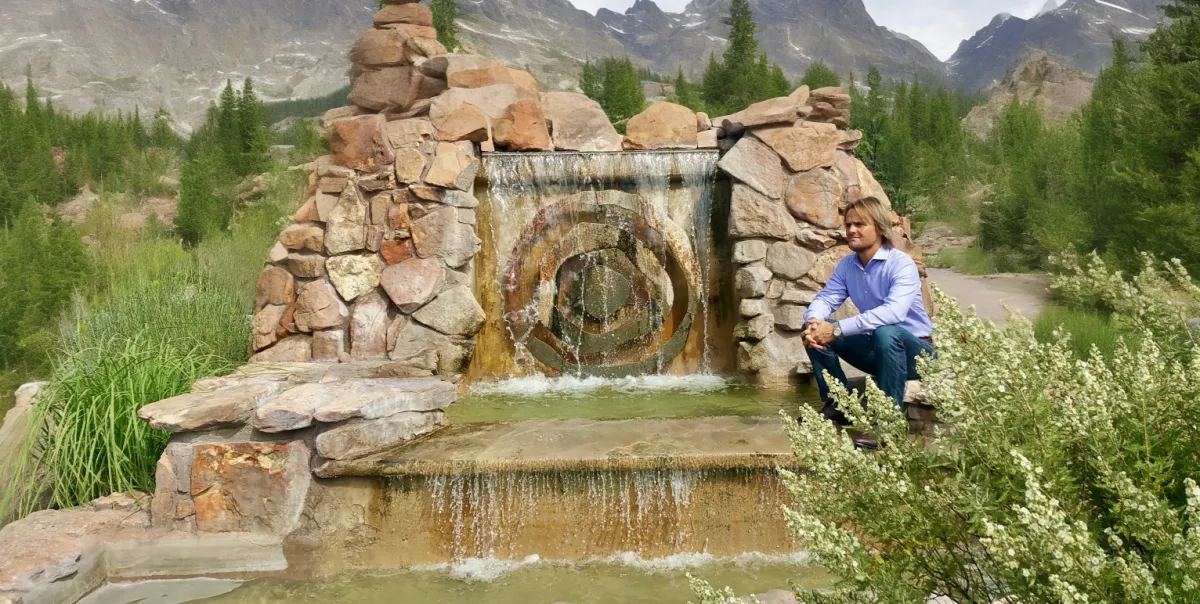
On the other hand, certain places restore you.
Healing spas.
Sacred sites.
Quiet nature.
If you’ve ever been to a healing spa or a truly restorative place—like Ojo Caliente Hot Springs in northern New Mexico—you can feel the difference immediately. [5]
Nature is the best battery charger most humans ignore.
But don’t turn nature into another performance treadmill.
Go out there and saunter.
As John Muir put it, we don’t need to “hike” like we’re rushing through something—we need to move through the mountains reverently, as if we’re walking through holy land.
Things
Things drain you when they become:
maintenance debt
status compensation
clutter pressure
Dirty car.
Messy house.
Cluttered desk.
Piles of stuff you never touch.
That’s life-force trapped in unfinished loops.
And there’s one modern “thing” that drains faster than most:
screens.
TV.
Phone.
Laptop.
Tablet.
Screen time is an energy issue.
Your eyes leak out energy through fixation.
Anyone who has worked too long or too late on a computer—or stayed up late watching a movie—knows the next-day evidence: heavy eyes, bags under the eyes, weaker attention, lower charge.
Blue-light blockers and filters can help at the margins, but the cost remains. [4]
The Upgrade: Energy Acquisitions
Not everything costs you.
Some people, places, and things deposit.
People Who Bless You
You know them.
They don’t do anything flashy.
But after you see them, you feel better.
Clearer.
More alive.
They’re like lucky charms—people who somehow leave others blessed.
Those are the best kind of friends to keep.
And here’s another clean indicator:
If you regularly need to nap or snack after someone, you’re probably in an inequitable energy exchange. That doesn’t mean you exile them. It means you get smarter about the way you relate.
Places That Heal You
A quiet spa.
A sacred spring.
A clean patch of nature.
Even ten minutes outside can lift your baseline.
Things That Recharge You
Sun.
Rocks.
Trees.
Ocean.
Ground.
Nature holds stored charge.
Your system knows how to drink it.
People have always known this instinctively: lay on warm rocks, sit by trees, soak in the sun, put your feet on the earth.
Also: create space.
Seasonal cleaning isn’t aesthetic.
It’s energetic.
Pass on what doesn’t serve.
Relax into the space you create.
Energy likes to flow, and it does so best through open space.
Do An Internal Audit
Periodically, run an audit.
When you feel depleted or stuck, stop guessing and ask hard questions.
People Audit
Notice how you feel after certain interactions.
If you feel wiped out, treat every minute like gambling your whole checking account.
Ask:
Will I go into energetic debt—or bankruptcy—to maintain this relationship?
Places Audit
Count how many hours you spend in places that irritate you.
Even if you get paid money, leaving with an upside-down energy account costs you later.
Ask:
Why am I putting so much energy into a place I despise?
Things Audit
Look at the piles.
The neglected projects.
The stuff you keep “meaning to deal with.”
Piles of stuff you complain about month after month is life force wasting away inside your own head.
Ask:
Is the energetic cost I’m paying for this stuff really worth it?
Want a Clean Read on Your Energy Account?
If you’re feeling depleted, stuck, or like your goals keep stalling, it’s rarely because you “lack motivation.”
More often, your vitality is tied up in hidden withdrawals—people, places, things, and inner loops you’ve normalized.
A Shen Life Audit is a focused, high-precision session where we map your biggest energy leaks, identify your highest-return deposits, and set a clean plan to restore your baseline so you can actually move.
If you’re built for more than survival and you want the fast, honest read—start there.
Good Stewardship
Energy economics is about stewardship.
If your withdrawals are higher than your deposits—you must do something. The math isn't sustainable.
Conserving your resources is how you become truly wealthy.
How you generate and spend vitality is often the exact reason you do—or do not—reach your next big goal.
Reach for it.
Resources
https://www.healthline.com/health/qi-deficiency#cure-for-conditions
https://www.sacredlotus.com/go/foundations-chinese-medicine/get/causes-illness-other#sex
https://www.consumerreports.org/eyeglass-stores/3-blue-blockers-put-to-the-test/

Want To Chat?
Want to discuss working together or something else?
Energy Economics
You are not just a body.
You are a dynamic bioenergetic system—spiritual, mental, emotional, and physical.
And underneath all of it is one resource that determines whether you win the day or collapse under it: vital energy.
In Shen Life we refer to this perspective as energy economics.
Not as a metaphor.
As a management problem.
Just like monetary economics tracks production, distribution, and consumption of money, energy economics tracks how you generate, spend, leak, and invest your life-force.
When your account runs low, you don’t just feel tired—you start seeing the early signs of system breakdown. [1]
Ultimately, your life is built upon what your system can afford.
Your Energy Account
Think of your vitality like a bank account.
Some choices deposit energy.
Some choices withdraw energy.
Some patterns quietly leak energy all day.
In energy economics, the only question is: what’s your balance?
When your account is high, you feel vital—charged, clear, capable of anything.
When your account is low, you feel drained and sluggish, and the system starts showing signs of breakdown—exhaustion, burnout, or getting sick more easily. [1]
Low energy pushes your life into debt.
High energy expands your life into leverage.
The goal is simple:
stay in positive balance.
The Three Tiers of Energy Exchange
Energy comes in and goes out through three main tiers.
Tier 1: Primary Sources
This is your base income:
food
air
water
Good, nutrient-rich food sustains life better than empty calories. Clean air and clean water raise your baseline more than polluted inputs. [2]
Granted, any food, air, and water are better than none at all.
But your quality of inputs sets the ceiling of your outputs.
Tier 2: People, Places, Things
This is your daily marketplace.
Every interaction yields a return.
Some contacts give you ROI.
Some contacts drain you.
Your job is not to become paranoid.
Your job is to become literate.
Tier 3: Inner Domain
This is the multiplier.
Your internal state can either compound your energy… or vaporize it.
An undisciplined mind, unrestrained desire, and imbalanced emotions are some of the quickest ways to lose energetic capital.
This is why Shen Life treats mindfulness and meditation as a form of investing.
Not as wellness branding.
As stewardship.
When you can regulate attention and emotion, you stop bleeding energy into useless loops.
And when the inner domain gets coherent, it can feel like compound interest—because you’re no longer living on scattered withdrawals. You’re learning how to access deeper reservoirs instead of forcing yourself through life on fumes.
Expenditures
For brevity, this article focuses mainly on Tier 2—the daily drains you can actually audit.
A quick note on the other tiers:
Tier 1 losses include major biological expenditures—women’s childbirth and menstruation, and men’s semen loss. [3]
Tier 3 losses come from reactivity, compulsive desire, and emotional imbalance (mindfulness is still the primary lever).
Your Tier 2 expenditures fall into three categories:
People
Places
Things
This is where most “good intentions” die.
Not because you lack motivation.
Because your energy is tied up in the wrong accounts.
People
People are often the largest drain.
Not because people are bad.
Because attachments cost.
Obligations you don’t want.
Conversations you tolerate.
Roles you keep playing.
And then the obvious energy hemorrhages:
Gossip.
Complaining.
Victim talk.
Endless drama.
There’s a reason culture invented nicknames like Negative Nancy, Debbie Downer, and Victim Victoria.
That kind of contact withdraws from your account minute by minute.
A simple indicator:
If you need to nap or snack after seeing someone, you just found an energy dump.
That doesn’t mean “cut them off.”
It means: change the parameters.
The Five-Minute Rule
If someone consistently drains you, try a boundary like this:
Give five minutes.
Then politely disengage.
Think of it like a spending limit on a credit card.
It’s handy for preventing energetic bankruptcy.
Places
Some places are energy vacuums.
Crazy activity.
Intense lights.
Excessive noise.
Sensory overload.
They pull your attention like a magnet.
Attention leaks.
Energy leaks.
A short drive down the Las Vegas strip makes the point.
A pass through Times Square makes the point.
It’s sensory overload—your attention chases the next shiny object until you’re low on energy, tired, and suddenly “need food or sleep.”
Theme parks are the same lesson in family form.
You get home whooped because your system has been extracted.
On the other hand, certain places restore you.
Healing spas.
Sacred sites.
Quiet nature.
If you’ve ever been to a healing spa or a truly restorative place—like Ojo Caliente Hot Springs in northern New Mexico—you can feel the difference immediately. [5]
Nature is the best battery charger most humans ignore.
But don’t turn nature into another performance treadmill.
Go out there and saunter.
As John Muir put it, we don’t need to “hike” like we’re rushing through something—we need to move through the mountains reverently, as if we’re walking through holy land.
Things
Things drain you when they become:
maintenance debt
status compensation
clutter pressure
Dirty car.
Messy house.
Cluttered desk.
Piles of stuff you never touch.
That’s life-force trapped in unfinished loops.
And there’s one modern “thing” that drains faster than most:
screens.
TV.
Phone.
Laptop.
Tablet.
Screen time is an energy issue.
Your eyes leak out energy through fixation.
Anyone who has worked too long or too late on a computer—or stayed up late watching a movie—knows the next-day evidence: heavy eyes, bags under the eyes, weaker attention, lower charge.
Blue-light blockers and filters can help at the margins, but the cost remains. [4]
The Upgrade: Energy Acquisitions
Not everything costs you.
Some people, places, and things deposit.
People Who Bless You
You know them.
They don’t do anything flashy.
But after you see them, you feel better.
Clearer.
More alive.
They’re like lucky charms—people who somehow leave others blessed.
Those are the best kind of friends to keep.
And here’s another clean indicator:
If you regularly need to nap or snack after someone, you’re probably in an inequitable energy exchange. That doesn’t mean you exile them. It means you get smarter about the way you relate.
Places That Heal You
A quiet spa.
A sacred spring.
A clean patch of nature.
Even ten minutes outside can lift your baseline.
Things That Recharge You
Sun.
Rocks.
Trees.
Ocean.
Ground.
Nature holds stored charge.
Your system knows how to drink it.
People have always known this instinctively: lay on warm rocks, sit by trees, soak in the sun, put your feet on the earth.
Also: create space.
Seasonal cleaning isn’t aesthetic.
It’s energetic.
Pass on what doesn’t serve.
Relax into the space you create.
Energy likes to flow, and it does so best through open space.
Do An Internal Audit
Periodically, run an audit.
When you feel depleted or stuck, stop guessing and ask hard questions.
People Audit
Notice how you feel after certain interactions.
If you feel wiped out, treat every minute like gambling your whole checking account.
Ask:
Will I go into energetic debt—or bankruptcy—to maintain this relationship?
Places Audit
Count how many hours you spend in places that irritate you.
Even if you get paid money, leaving with an upside-down energy account costs you later.
Ask:
Why am I putting so much energy into a place I despise?
Things Audit
Look at the piles.
The neglected projects.
The stuff you keep “meaning to deal with.”
Piles of stuff you complain about month after month is life force wasting away inside your own head.
Ask:
Is the energetic cost I’m paying for this stuff really worth it?
Want a Clean Read on Your Energy Account?
If you’re feeling depleted, stuck, or like your goals keep stalling, it’s rarely because you “lack motivation.”
More often, your vitality is tied up in hidden withdrawals—people, places, things, and inner loops you’ve normalized.
A Shen Life Audit is a focused, high-precision session where we map your biggest energy leaks, identify your highest-return deposits, and set a clean plan to restore your baseline so you can actually move.
If you’re built for more than survival and you want the fast, honest read—start there.
Good Stewardship
Energy economics is about stewardship.
If your withdrawals are higher than your deposits—you must do something. The math isn't sustainable.
Conserving your resources is how you become truly wealthy.
How you generate and spend vitality is often the exact reason you do—or do not—reach your next big goal.
Reach for it.
Resources
https://www.healthline.com/health/qi-deficiency#cure-for-conditions
https://www.sacredlotus.com/go/foundations-chinese-medicine/get/causes-illness-other#sex
https://www.consumerreports.org/eyeglass-stores/3-blue-blockers-put-to-the-test/
Walk The Shen Life Path
To build your Shen Life Practice, there is an ideal path. Each step builds on the one prior in order to develop your knowledge and implementation of the Shen Life Model in your experience of life.
STEP 1.
Take The Transformation Training.
This video training series covers the core of the Shen Life path: how to awaken the spiritual fires and manifest new potentials for your life.
STEP 2.
Join The Revolushen.
Spreading awareness of the principles of Shen Life and the value of this path, Shen Life's Broadcast, The Revolushen, is a combination of teaching and commentary on current events that affect each of us in pursuit of true liberation. Join this spirit-focused revolution.
STEP 3.
Dive Into The Shen Life Immershen.
This multi-media program dives into the depths of the entire Shen Life Model in a 12-module course. You will examine the holographic nature of life and address every aspect of your life...yes, everything...so you can heal, transform, and reach your full potential.
STEP 4.
Join The Shen Life Pack.
Continue to walk the Shen Life path with the support of the Shen Life community or Pack of growth-minded people who support each other virtually in the Shen Den with ongoing content from the leaders.
Contact
12400 W. HWY 71,
STE 350-312
BEE CAVE, TX 78738
1-866-497-SHEN (7436)